

Essential Brake Maintenance for the 2026 Ford Lineup
Maintaining the stopping power of a heavy-duty vehicle requires more than just waiting for a dashboard light to appear. For the 2026 Ford F-150, Ford specifies that the brake pads, rotors, and parking brake system must be inspected at every oil change interval. This proactive approach ensures that the high-friction components responsible for halting a 5.0L V8 or 3.5L V6 engine remain within safe operating tolerances. Because these trucks are often used for hauling and work-site duties, the stress on the hydraulic system and friction linings is significantly higher than that of a standard passenger car.
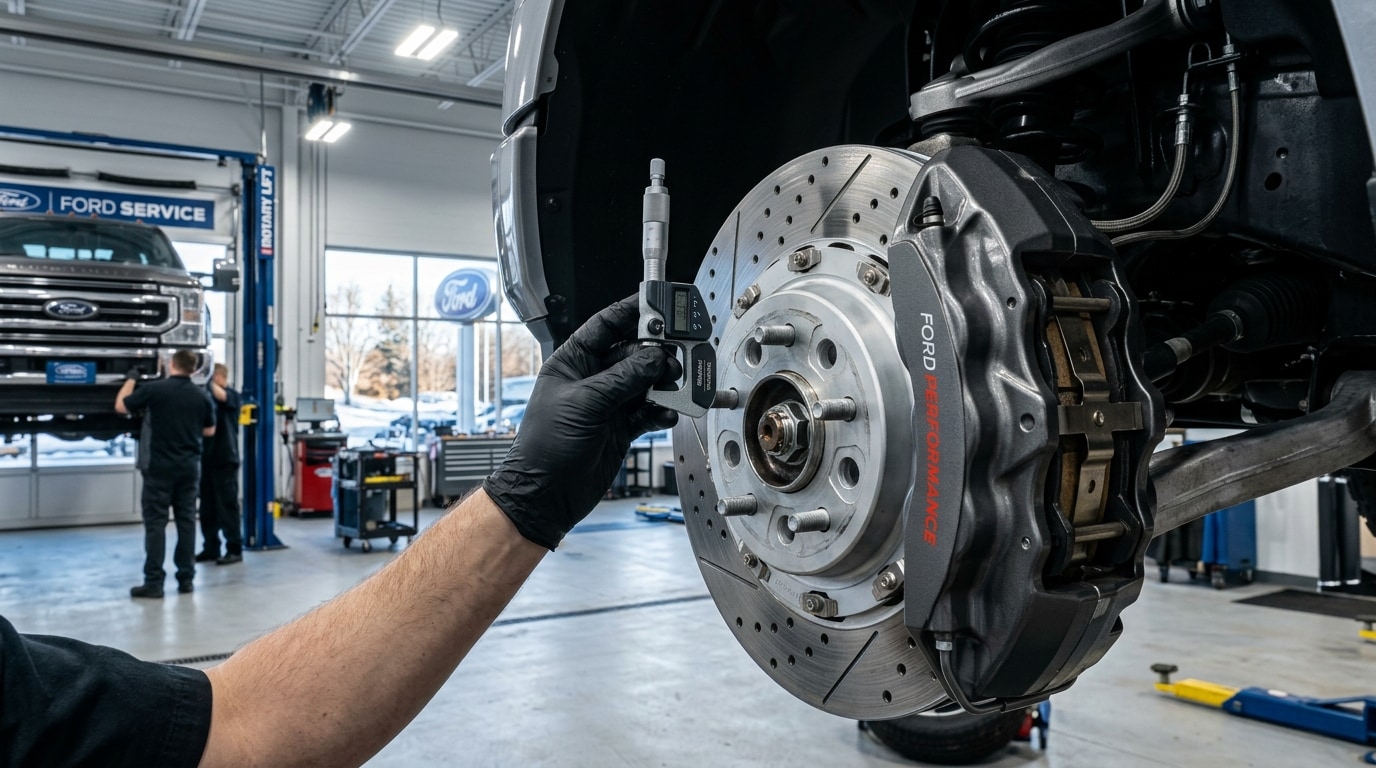
Our team of certified technicians utilizes specialized diagnostic tools to measure pad thickness and rotor runout, ensuring your vehicle meets factory safety standards. If you are noticing a change in pedal feel or hearing unusual noises while slowing down, you can reach (508) 591-5242 to speak with a service advisor about a professional evaluation. Regular inspections are particularly vital for the 2026 Ford Super Duty, where the TorqShift-G 10-speed SelectShift Automatic transmission works in tandem with the braking system to manage massive towing loads safely.
The local environment also plays a major role in how often you should visit our service center. Given the heavy road-salt use during New England winters, undercarriage components and brake lines are susceptible to corrosion. We recommend that drivers from Bridgewater prioritize these checks to prevent salt buildup from seizing calipers or degrading brake hoses. To ensure your truck or SUV stays in peak condition, you can easily book a maintenance visit online at a time that fits your schedule. For those planning their first visit, our Plymouth service center is conveniently located to serve the entire region with specialized Ford expertise.
Table of Contents
- Understanding Recommended Service Intervals for Newer Ford Trucks and SUVs
- Optimizing 2026 Ford Explorer Brake Performance and Longevity
- Identifying Warning Signs and Wear Patterns in Modern Braking Systems
- Ford PremiumCare and Maintenance Plan Coverage for Brake Components
- Quick Answers Regarding 2026 Ford Brake Service and Care
Understanding Recommended Service Intervals for Newer Ford Trucks and SUVs
How often should you have the brakes inspected on a newer Ford truck or SUV? Ford’s 2026 scheduled maintenance chart suggests a multi-point inspection, which includes the entire braking system, at every oil change interval as indicated by the Intelligent Oil-Life Monitor. For most drivers, this occurs every 7,500 to 10,000 miles. However, the actual lifespan of your brake pads and rotors can vary between 25,000 and 50,000 miles depending on your specific driving habits and the terrain you frequent.
Trucks that are regularly used for towing heavy trailers or hauling cargo through the rolling terrain around Middleborough Center will naturally experience accelerated wear. In these "severe duty" scenarios, we often suggest more frequent check-ups, potentially every 5,000 miles, to catch thinning pads before they damage the rotors. Beyond the physical hardware, Ford recommends a full brake fluid exchange every three years. This is critical because brake fluid is hygroscopic, meaning it absorbs moisture over time, which can lead to internal corrosion and a "spongy" brake pedal.
To help manage the costs of these essential safety services, we frequently offer maintenance and repair discounts that bundle inspections with other routine work like tire rotations. Utilizing these programs allows you to follow the manufacturer's rigid maintenance schedule while keeping ownership costs predictable. Consistent adherence to these intervals not only keeps you safe but also protects your basic 3 years / 36,000 miles and powertrain 5 years / 60,000 miles warranty coverage by documenting that the vehicle was cared for according to factory standards.
Optimizing 2026 Ford Explorer Brake Performance and Longevity
The 2026 Ford Explorer remains a staple for families who need a balance of efficiency and utility, but its braking requirements are distinct from the smaller crossovers in the lineup. Most Explorer models require a brake pad inspection every 10,000 miles, typically performed during a tire rotation. Because the Explorer is frequently used for school drop-offs and stop-and-go commuting, the friction material on the pads can glaze if subjected to constant light braking, or wear prematurely if the vehicle is often loaded to its maximum passenger capacity.
Owners can extend the life of their braking system by practicing "engine braking" on long descents and avoiding "riding the brakes" in heavy traffic. Drivers who utilize the SelectShift manual mode to downshift occasionally find that their pads last closer to the 50,000-mile mark. It is also important to ensure that the wheels are torqued correctly during every tire service; uneven lug nut pressure can lead to rotor warping, which manifests as a vibration in the steering wheel when slowing down from highway speeds.
When a replacement becomes necessary, using original equipment components is vital for maintaining the specific stopping distances the Explorer was engineered to achieve. Aftermarket pads may offer a lower initial price, but they often lack the specific chamfers and shim designs required to keep the brakes quiet. For a vehicle that serves as a primary family hauler, maintaining the integrity of the TOP SAFETY PICK rating involves ensuring every component of the active safety system, including the brake hardware, is functioning exactly as intended.
Identifying Warning Signs and Wear Patterns in Modern Braking Systems
What are the signs that a 2026 Ford needs new brakes? While modern vehicles are equipped with sophisticated electronic sensors, your ears and feet are often the first line of defense. A high-pitched squealing noise when applying the brakes is usually the mechanical wear indicator—a small metal tab designed to contact the rotor when the pad material has reached a critically low level. If this sound transitions into a harsh grinding or "metal-on-metal" noise, the pad material is likely gone, and the backing plate is damaging the rotor surface.
Physical feedback through the vehicle is another clear indicator of wear. If you feel a pulsating sensation through the brake pedal or a shudder in the steering wheel, it often points to "DTV" or Disc Thickness Variation. This happens when rotors become warped or have uneven deposits of brake pad material on their surface. Additionally, if the vehicle pulls to one side during braking, it could indicate a sticking caliper or a restriction in a brake hose, both of which require immediate professional attention to prevent a loss of control.
Drivers in Wareham Center, where coastal humidity can contribute to surface rust on rotors after the vehicle sits overnight, might notice a brief scraping sound during the first few stops of the morning. This is generally normal as the pads "sweep" the surface clean. However, if the dashboard brake warning light stays illuminated or the pedal feels unusually soft and sinks toward the floor, these are symptoms of a hydraulic leak or air in the system. In these cases, the vehicle should not be driven until it has been inspected by a technician to ensure the hydraulic pressure is sufficient for emergency stopping.
Ford PremiumCare and Maintenance Plan Coverage for Brake Components
Does your protection plan cover the cost of new pads and rotors? While the standard Ford PremiumCare service plan covers a vast array of mechanical components, it generally excludes "wear items" like brake pads and rotors. However, many of our customers opt for the Ford Protect Premium Maintenance Plan. This specific upgrade is designed to cover the cost of routine wear-and-tear parts, including the replacement of brake pads and linings, at the intervals specified in your owner's manual.
For those who do not have a pre-paid maintenance plan, we offer a Lifetime Brake Pad Guarantee on qualifying Motorcraft replacements. When you have our team install these specific pads, the cost of the parts for future replacements is covered for as long as you own that vehicle. This is an excellent value for high-mileage drivers or those who frequently tow with their 2026 Ford F-150, as it effectively turns a recurring maintenance expense into a one-time investment in hardware.
When performing these repairs, we exclusively use genuine Ford and Motorcraft parts to ensure compatibility with your vehicle's advanced driver-assist features. Technologies like Pre-Collision Assist with Automatic Emergency Braking rely on the predictable performance of the factory brake system. Using non-standard parts can occasionally interfere with the calibration of these safety systems, which is why our technicians strictly adhere to OEM specifications for every rotor resurfacing and pad installation.
Quick Answers Regarding 2026 Ford Brake Service and Care
Q: Do I need to replace my rotors every time I get new brake pads? Rotors do not always require replacement with every pad change. Our technicians will measure the thickness and surface integrity of your rotors; if they are above the minimum "discard" thickness and are not warped, they can often be resurfaced (machined) to provide a smooth mating surface for the new pads.
Q: Is a brake fluid flush really necessary every three years? Yes, because brake fluid naturally absorbs moisture from the air, which lowers its boiling point and can cause internal corrosion. Over time, contaminated fluid can damage the expensive ABS control module and calipers, making a regular flush a cost-effective way to prevent major repairs.
Q: Will using aftermarket brake parts void my 2026 Ford warranty? Using aftermarket parts does not automatically void your basic 3 years / 36,000 miles warranty, but if an aftermarket component causes a failure in a related system, that specific repair may not be covered. We always recommend OEM parts to ensure full compatibility with Ford's safety and performance standards.
Q: How long does a standard brake pad replacement take at the dealership? A standard brake service for a single axle typically takes about 90 minutes to two hours. This includes a full inspection of the hydraulic lines, calipers, and master cylinder to ensure the entire system is operating safely before you get back on the road.
Q: Can I check my own brake pad thickness at home? While some wheel designs allow you to see the outer brake pad, it is difficult to see the inner pad where uneven wear often occurs. A professional multi-point inspection is the most reliable way to get an accurate measurement of all four sets of pads and the condition of the inner rotor surfaces.
If you have more specific questions about your vehicle's braking system or need to verify your current coverage, you can (508) 591-5242 to speak with our service team directly. For those who prefer to discuss their maintenance needs in person, our Plymouth location is staffed with factory-trained experts ready to assist with everything from routine inspections to complex hydraulic repairs.
© 2026 Colonial Ford of Plymouth. All rights reserved.