

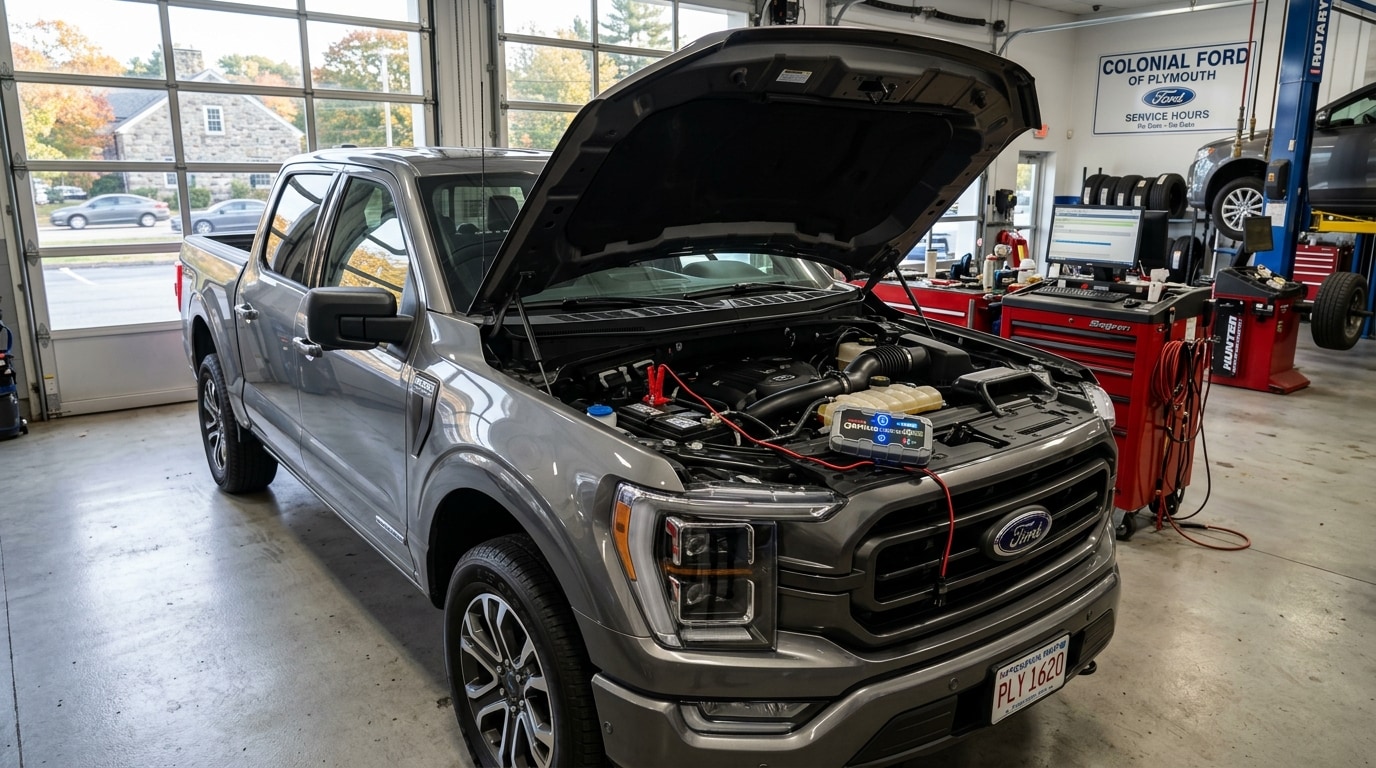
Essential 12-Volt Battery Care for the 2026 Ford Lineup
Maintaining the 12-volt battery in a modern vehicle involves more than just ensuring the engine turns over on a cold morning. In the 2026 Ford lineup, this battery serves as the backbone for complex modules, including telematics, security systems, and driver-assist technologies. For owners of the 2026 Ford F-150, the 12-volt system must support a significant electrical load even when the 5.0L V8 engine is off. Without proper voltage, these systems can enter a deep-sleep mode to conserve power, which may temporarily disable remote features or keyless entry.
If your vehicle sits for extended periods, parasitic drain from the body control module can gradually deplete the charge. Local drivers who don't use their vehicles daily—perhaps those who rely on the commuter rail from Bridgewater—should consider using a smart maintenance charger. This device keeps the battery at an optimal voltage without overcharging the cells. For those driving the 2026 Ford Expedition, frequent short trips may not provide the alternator enough time to fully replenish the energy used during startup.
When you notice a sluggish crank or flickering interior lights, it is often a signal that the battery's chemistry is beginning to fail. Our team at 11 Pilgrim Hill Rd, Plymouth, MA 02360 can perform a comprehensive diagnostic to determine if the issue lies with the battery itself or the charging system. To ensure your vehicle remains reliable for every commute, you can schedule a service visit online. If you are experiencing a complete failure and need to reach our technicians directly, please give us a quick call or find our service center location to drop off your vehicle for testing.
Table of Contents
- Recommended Maintenance Schedules and Annual Testing Intervals
- Understanding Group Sizes and the Importance of OEM Specifications
- The Role of the Battery Management System and Software Resets
- Troubleshooting Auto Start-Stop Issues and Auxiliary Power Drain
- Ford Factory Warranty Coverage and Battery Replacement Logistics
- Quick Answers Before You Visit
- Maintain Your 2026 Ford at Colonial Ford of Plymouth
Recommended Maintenance Schedules and Annual Testing Intervals
Ford service guidelines suggest a proactive approach to battery health, moving away from the "replace it when it dies" mentality of the past. For most 2026 models, the 12-volt battery should be inspected every 10,000 miles or 12 months, whichever occurs first. During this check, technicians look for terminal corrosion, secure mounting, and any signs of casing deformation. For vehicles like the 2026 Ford Explorer, which features a high number of electronic accessories, we recommend a formal load test annually once the battery reaches its third year of service.
In the variable climate of southeastern Massachusetts, the transition from summer humidity to sub-freezing winter temperatures can accelerate the degradation of battery plates. Owners in Middleborough Center often deal with the "salt-belt" effect, where road salt and moisture can create a conductive path across the top of the battery, leading to a slow discharge. Cleaning the terminals with a specialized cleaner and applying a protective dielectric grease can prevent this buildup and ensure a strong connection for the 2.3L I4 engine's starter.
Hybrid and electric models have unique requirements that differ from traditional internal combustion vehicles. While the high-voltage pack handles propulsion, a 12-volt auxiliary battery still powers the computers that manage the high-voltage contactors. Ford’s EV care guidance specifies that these vehicles should be started and moved at least once every 30 days to maintain the health of the auxiliary system. Neglecting this can lead to a "bricked" state where the vehicle cannot engage its primary power source, even if the large traction battery is fully charged.
Understanding Group Sizes and the Importance of OEM Specifications
Does your vehicle require a Group Size 48 (H6) or a Group Size 94R (H7) battery? Selecting the correct battery for a 2026 Ford requires matching the specific BCI Group Size and chemistry type designated by the factory. These sizes are not interchangeable; the physical dimensions and the orientation of the positive and negative terminals must align perfectly with the vehicle's battery tray and cable reach. Using an undersized battery may provide enough cold cranking amps for a few months but will likely fail prematurely due to the high cycling demands of the vehicle's electronics.
Beyond physical size, the choice between an Absorbent Glass Mat (AGM) battery and a standard Flooded Lead Acid (FLA) battery is critical. Many 2026 models come standard with AGM technology because it handles deep discharges and rapid recharging better than traditional batteries. If a vehicle is factory-equipped with an AGM battery, replacing it with a cheaper FLA unit can lead to charging errors and reduced lifespan. The charging profile programmed into the vehicle's computer is specifically tuned for the internal resistance of the original battery type.
To ensure you are getting the exact component designed for your specific trim—whether it is an XL or a Platinum—it is best to source your replacements through an authorized center. Our team can help you identify the correct Motorcraft parts that meet or exceed the original factory specifications. Using genuine parts ensures that the cold cranking amps and reserve capacity are sufficient to power the advanced safety features, such as the Front crash prevention 2.0 system found on the 2026 Ford F-150.
The Role of the Battery Management System and Software Resets
The Battery Management System (BMS) is a sophisticated software layer that monitors the battery's state of charge, internal temperature, and overall health. As a battery ages, its ability to hold a charge diminishes, and the BMS adjusts the alternator's output to compensate. This dynamic charging strategy helps extend the life of an older battery by preventing overcharging. However, this intelligence creates a specific requirement during replacement: the BMS must be reset to inform the vehicle that a new, fresh battery has been installed.
Failure to perform a BMS reset after installing a new battery can lead to several operational issues. If the system still operates on the old, degraded battery's profile, it may continue to use a high-voltage charging profile that can actually damage the new cells. Furthermore, the vehicle may keep certain non-essential electronic features disabled because it believes the power reserve is still low. This is a common point of confusion for DIY enthusiasts who replace their own batteries only to find that their convenience features haven't returned to normal.
Professional technicians use diagnostic tools to clear the learned battery data and restart the monitoring cycle. This process ensures the alternator provides the correct voltage from day one, maximizing the lifespan of your investment. For residents in Wareham Center who frequently use their vehicles for coastal trips, ensuring the BMS is correctly calibrated is essential for maintaining the reliability of the electronic hatch and security systems that are often taxed during weekend outings.
Troubleshooting Auto Start-Stop Issues and Auxiliary Power Drain
One of the most frequent indicators of a weakening 12-volt battery is the inconsistent behavior of the Auto Start-Stop system. This feature is designed to shut down the engine at stoplights to save fuel, but it will only engage if the battery's state of charge is above a specific threshold—typically around 70% to 80%. If your 2026 Ford Escape or Explorer stops turning off the engine at intersections, the computer has likely determined that the battery does not have enough reserve power to reliably restart the engine while supporting the headlights and climate control.
Auxiliary power drain, or "parasitic draw," can also be a culprit when a battery seems to die overnight. Modern Fords are "connected" vehicles, meaning they periodically wake up to check for software updates or communicate with the FordPass app. If a module fails to go back to sleep, it can pull a constant current that drains the battery. Common sources of drain include:
- Aftermarket dash cams or GPS trackers plugged into "always-on" 12V outlets.
- Key fobs kept too close to the vehicle, preventing the proximity sensors from entering sleep mode.
- Faulty door latches or hood switches that trick the computer into thinking the vehicle is still in use.
If you find yourself needing frequent jump-starts, it is important to address the root cause rather than just replacing the battery. A parasitic draw test can identify which circuit is staying active. For those driving the 2026 Ford F-150, heavy-duty use or frequent winching can put extra strain on the 12-volt system, making regular health checks even more vital to prevent being stranded.
Ford Factory Warranty Coverage and Battery Replacement Logistics
The 12-volt battery in a new Ford is typically covered under the 3 years / 36,000 miles basic bumper-to-bumper warranty. If a battery fails due to a manufacturing defect within this window, the replacement is generally covered at no cost to the owner. However, it is important to note that batteries are considered wear-and-tear items. If the failure is caused by owner negligence—such as leaving the lights on or letting the vehicle sit for months without a maintainer—the warranty claim may be denied.
Once the initial bumper-to-bumper warranty expires, Ford often provides a pro-rated warranty on Motorcraft replacement batteries. This means that if a replacement battery fails early, you may receive a credit toward a new one based on how much of the expected lifespan remains. For high-mileage drivers, keeping service records is essential to prove that the battery was maintained according to the factory schedule. This documentation can be the difference between a covered repair and an out-of-pocket expense.
Our service department handles the logistics of testing, core returns, and environmental disposal of old batteries. We ensure that the lead and acid are recycled according to local regulations, saving you the hassle of finding a disposal site. When you bring your vehicle in, we also check for any outstanding field service actions or software updates that might improve the charging logic of your specific model, ensuring your electrical system remains as efficient as possible.
Quick Answers Before You Visit
Q: What is the recommended maintenance schedule for the 12-volt battery in a 2026 Ford? The battery should be visually inspected every 10,000 miles for corrosion or loose connections. After the third year of ownership, we recommend an annual load test to measure the actual cranking capacity, especially before the onset of winter.
Q: Does Ford’s factory warranty cover 12‑volt battery replacement? Yes, the original battery is covered under the 3 years / 36,000 miles bumper-to-bumper warranty for defects in materials or workmanship. After this period, or if the failure is due to lack of use, replacement is typically an out-of-pocket maintenance cost.
Q: Why is my Auto Start-Stop not working? The system is programmed to prioritize battery health; if the 12-volt battery’s charge level or health drops below a certain point, the system disables the engine-off feature to ensure there is enough power to restart. This is often the first sign that your battery is nearing the end of its life.
Q: What is the Battery Management System (BMS) reset? It is a software procedure that tells the vehicle’s computer a new battery has been installed. This allows the alternator to reset its charging logic, ensuring the new battery isn't overcharged based on the old battery's degraded profile.
Q: How do I clean corrosion off the battery terminals? You can use a mixture of baking soda and water with a wire brush to neutralize the acid buildup. Once clean and dry, applying a thin layer of dielectric grease or a terminal protector spray will help prevent future oxidation.
Maintain Your 2026 Ford at Colonial Ford of Plymouth
Ensuring your vehicle starts reliably every time begins with expert care and genuine components. Whether you are heading out for a weekend at the parks in Bridgewater or navigating a daily commute, a healthy battery is your first line of defense against unexpected delays. Our certified technicians are equipped with the latest diagnostic tools to test your electrical system and perform the necessary software resets required for modern Ford models.
To make your next visit even more convenient, we invite you to browse our current maintenance and parts specials for potential savings on battery testing and replacement. If you have questions about your vehicle's specific requirements, you can reach our service advisors with a quick call to discuss your concerns. For those ready to drop off their vehicle, our Plymouth service center is easily accessible and ready to assist you with all your automotive needs.
© 2026 Colonial Ford of Plymouth. All rights reserved.