
Understanding the Standards of Ford Collision Repair
Ford recommends that all collision repairs are performed using Ford Original Equipment (OE) parts to ensure the vehicle returns to its pre-accident safety and performance levels. When a vehicle is involved in a crash, the structural integrity and the precise fit of replacement panels are critical for maintaining the engineered crumple zones. Using authentic components from our parts department helps preserve the vehicle's structural geometry, which is difficult to replicate with non-certified aftermarket alternatives.
Modern Ford vehicles are complex machines where the body panels often work in tandem with electronic safety systems. After a collision, our team focuses on comprehensive diagnostics to identify hidden damage that might not be visible on the surface. If you need immediate assistance with a damaged vehicle, you can reach us at (508) 591-5242 to discuss the next steps for your repair. We prioritize restoring every mechanical and structural component to official Ford Workshop Manual specifications, ensuring that your vehicle’s safety systems, such as airbags and seat belt pretensioners, function as intended.
For drivers navigating the aftermath of an accident, finding a reliable facility is the first priority. You can find our Plymouth service center conveniently located to serve the region with professional collision support. Whether you require minor paint refinishing or major structural work, the goal is always a seamless restoration. To get started on your vehicle's recovery, feel free to schedule service online to have our specialists perform a detailed damage assessment.
Table of Contents
- The Ford Certified Collision Network Program Explained
- Specialized Aluminum Body Repair for Ford Trucks and SUVs
- Key Factors Influencing Ford Accident Repair Costs
- Navigating Massachusetts Insurance Rights and Repair Claims
- Essential Collision Certifications and Safety Restorations
- Answers to Common Ford Collision and Repair Questions
- Restoring Your Vehicle to Factory Standards at Our Service Center
The Ford Certified Collision Network Program Explained
The Ford Certified Collision Network (FCCN) is a rigorous program designed to vet body shops for their technical expertise, equipment, and training. To maintain certification, a shop must achieve I-CAR Gold Class recognition, which is the highest role-relevant training credential in the collision repair industry. This ensures that the technicians working on your vehicle are up to date on the latest repair technologies and metallurgy, which is especially important as Ford continues to innovate with high-strength steels and lightweight materials.
A primary benefit of choosing a certified facility is the access to specialized Ford diagnostic software, including IDS or FDRS. These tools allow technicians to communicate directly with your vehicle's onboard computers to reset safety modules and clear fault codes that generic scanners might miss. For families in Bridgewater, this level of precision is vital for ensuring that a repaired SUV maintains its safety ratings for the daily commute to local schools or Bridgewater State University. Certified shops are also required to use specific Ford-approved tools, such as dedicated welders and frame-straightening equipment, to meet factory tolerances.
Choosing a certified repairer also protects the long-term value of your vehicle. When a Ford is repaired using factory-approved methods and genuine parts, it maintains the integrity of the original manufacturer's warranty. This is a significant contrast to non-certified shops that may use "like kind and quality" (LKQ) parts, which can lead to fitment issues or accelerated corrosion. By adhering to the Ford Certified Collision Network standards, we ensure that every repair meets the exact engineering requirements set by the manufacturer.
Specialized Aluminum Body Repair for Ford Trucks and SUVs
Ford revolutionized the truck market by introducing high-strength, military-grade aluminum alloy bodies for the Ford F-150 and later the Expedition and Super Duty. While aluminum offers significant weight savings and dent resistance, it requires entirely different repair techniques than traditional steel. Aluminum does not have a "memory" like steel, meaning it cannot be easily pulled back into shape; it often requires specialized heat-induction tools and dedicated aluminum-only workstations to prevent cross-contamination.
Cross-contamination occurs when steel dust or shavings come into contact with aluminum, leading to galvanic corrosion that can weaken the structure over time. Because of this risk, a qualified Ford body shop must utilize separate tool sets—including hammers, dollies, and vacuum systems—specifically for aluminum work. This is a critical consideration for residents in Middleborough Center who use their trucks for heavy-duty tasks or towing near the Taunton River, as the structural integrity of the bed and frame must be absolute.
Beyond the physical metalwork, aluminum body repairs often involve specialized riveting and bonding procedures rather than traditional welding. Ford specifies the use of high-strength structural adhesives and self-piercing rivets to join panels, replicating the factory assembly process. This ensures the vehicle's crash-energy management system remains intact. Our technicians follow these exact Ford repair procedures to ensure that your truck or SUV remains as durable and safe as the day it left the assembly line.
Key Factors Influencing Ford Accident Repair Costs
The total cost of a collision repair is determined by several variables, starting with the extent of structural versus cosmetic damage. While a scratched bumper might seem simple, modern Ford bumpers often house ultrasonic sensors and radar units for the Ford Co-Pilot360 suite. If these sensors are displaced or damaged, the cost increases due to the need for replacement parts and the labor-intensive process of recalibrating the Pre-Collision Assist or Blind Spot Information System.
Labor rates and the complexity of the paint match also play a significant role in the final estimate. Ford utilizes advanced paint stages, including tri-coat pearls and specific metallic flakes, which require precision mixing and multiple spray cycles to match perfectly. In Wareham Center, where coastal air and salt can affect a vehicle's exterior over time, achieving a perfect color match requires a high level of skill and high-quality refinishing materials. Additionally, mechanical repairs—such as suspension alignment or cooling system replacement—are often necessary after a front-end impact, adding to the total labor hours.
The choice between Original Equipment (OE) parts and aftermarket alternatives is another major cost driver. While insurance companies may suggest aftermarket parts to lower the claim cost, these components may not meet Ford's exact specifications for thickness, weight, or crash-test performance. We always advocate for genuine parts because they are designed to fit the first time, reducing labor hours spent on "shimming" or adjusting non-standard panels. Investing in the correct parts during the initial repair often prevents more expensive mechanical failures or safety issues down the road.
Navigating Massachusetts Insurance Rights and Repair Claims
Massachusetts law provides strong protections for vehicle owners, most notably the right to choose your own repair facility. While an insurance company may provide a list of "preferred" or "referral" shops, they cannot legally require you to use a specific one. This allows you to select a shop based on their certifications and expertise with Ford vehicles rather than the insurer's bottom line. When I walk families through the claims process, I always remind them that the contract for repair is between the shop and the vehicle owner, not the insurance company. If you have questions about your coverage, our finance department can help you understand how repair costs fit into your overall vehicle investment.
Before any work begins, Massachusetts law requires a written appraisal of the motor vehicle damage. This appraisal must provide a detailed itemization of parts, labor, and the specific repair procedures required. It is common for a shop to find "supplemental" damage once the vehicle is disassembled; in these cases, the shop works directly with the insurance adjuster to update the claim. This ensures that hidden issues, such as a bent steering column or a cracked radiator support, are addressed and covered by the insurance policy.
It is generally advisable to notify your insurance company as soon as practical after an accident to initiate the claim. However, you have the right to have your vehicle towed directly to the shop of your choice immediately following a crash. This prevents the vehicle from sitting in a storage lot where it may incur daily fees. By choosing a shop that understands the Massachusetts Division of Insurance standards, you ensure that the appraisal process is handled professionally and that your vehicle is restored without cutting corners on safety or parts quality.
Essential Collision Certifications and Safety Restorations
A quality collision repair shop should hold specific industry credentials that prove their commitment to safety. Beyond Ford-specific certifications, look for the I-CAR Gold Class symbol and ASE (Automotive Service Excellence) certifications in collision repair. These designations indicate that the technicians have undergone rigorous testing on structural analysis, electrical systems, and mechanical repairs. Following a serious crash, NHTSA advises that critical safety components like airbags and seat belt systems must be inspected and replaced according to the manufacturer’s instructions.
Safety restoration also involves the precise calibration of Advanced Driver Assistance Systems (ADAS). If a windshield is replaced or a front-end repair is performed, the cameras and sensors for lane-keeping systems must be recalibrated using specialized targets. Only shops with the correct Ford diagnostic software can ensure these systems are communicating correctly. Without this step, your safety features might not activate when needed, or they could provide false warnings, creating a hazard rather than a safeguard.
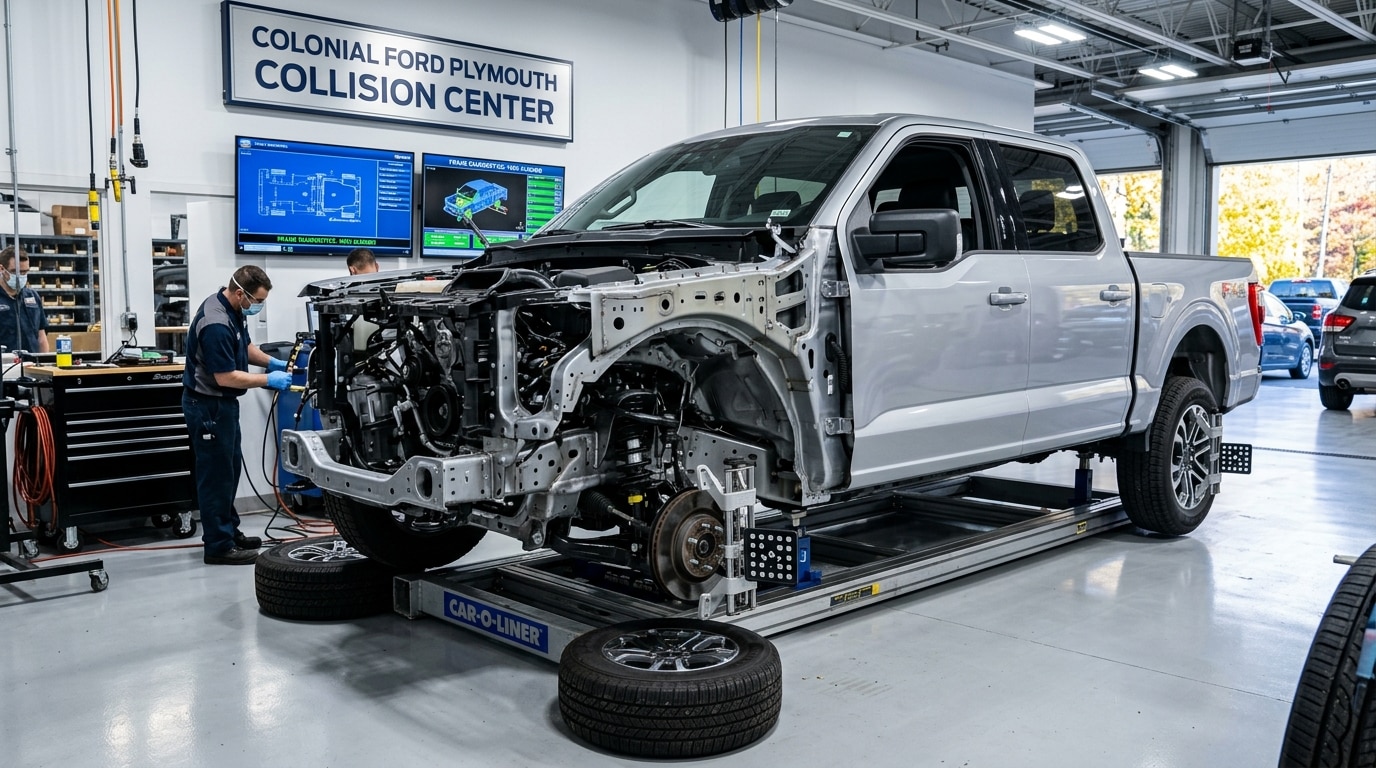
Finally, structural repairs must be verified using three-dimensional measuring systems. Modern Ford frames are engineered with specific "crush zones" designed to absorb energy during an impact. If the frame is even a few millimeters out of alignment, it can change how the vehicle handles and how it will perform in a subsequent accident. We use precision measuring equipment to ensure the chassis is returned to factory tolerances, guaranteeing that the structural "skeleton" of your vehicle is sound.
Answers to Common Ford Collision and Repair Questions
Q: Does a Ford body shop handle aluminum body repairs on Ford trucks and SUVs?
Yes, many Ford-certified facilities are specifically equipped with dedicated tools and separate clean-room environments to handle aluminum. Because aluminum requires different welding and bonding techniques than steel, specialized training is required to ensure the repair is structurally sound. Our technicians follow Ford’s specific procedures for riveting and bonding to maintain the high-strength integrity of the F-150 and Expedition frames.
Q: Can I choose the body shop first and then open a claim?
You have the right to have your vehicle towed to the shop of your choice immediately after an accident. While you should notify your insurer as soon as possible to start the claims process, you are not required to wait for their "approved" list before selecting a repairer. Choosing your shop first allows you to get an expert opinion on the damage before the insurance appraisal takes place.
Q: What certifications should a quality collision repair shop have for Ford vehicles?
A reputable shop should hold a Ford Certified Collision Network credential, which proves they have the factory-approved tools and training. Additionally, I-CAR Gold Class recognition is the industry standard for ongoing technical education. These certifications ensure the shop is capable of handling complex tasks like ADAS calibration and structural aluminum work to factory specifications.
Q: Are certified shops required to use OEM parts?
While Ford certification emphasizes the use of Original Equipment parts for safety and fitment, the final decision often involves your insurance policy. However, certified shops will advocate for OE parts, especially for structural components and safety sensors, because they are the only parts guaranteed to meet Ford's original crash-test standards. We provide a detailed itemization of why genuine parts are necessary for a proper restoration.
Q: How long does a typical collision repair take?
The timeline varies significantly based on the severity of the damage and the availability of parts. A minor cosmetic repair might take a few days, while major structural work involving aluminum panels and sensor calibration can take two weeks or more. We provide regular updates throughout the process so you know exactly when your vehicle will be ready for the road again.
Restoring Your Vehicle to Factory Standards at Our Service Center
At Colonial Ford of Plymouth, our team is dedicated to returning your vehicle to the road in peak condition. We understand that an accident is a stressful event, which is why we focus on transparent communication and technical excellence. By utilizing genuine Ford parts and following factory-approved repair sequences, we ensure your vehicle remains as safe and reliable as it was before the collision.
Before you commit to a repair, be sure to check our latest service and parts specials for opportunities to save on maintenance and genuine components. If you have questions about an estimate or need to coordinate a tow, please give us a quick call at your convenience. Our specialists are ready to guide you through every step of the restoration process. For those visiting us for the first time, you can find our service department at 11 Pilgrim Hill Rd, where we provide professional collision support for drivers throughout the region.
© 2026 Colonial Ford of Plymouth. All rights reserved.